 OnAir
Decode DVB with an SDR
DVB-T2 and DVB-T, automatic (Europe, Middle East, Africa, Asia, Australia).
What DVB is
DVB-T2 and DVB-T are the digital terrestrial television standards used across Europe, the Middle East, Africa, Asia and Australia. A channel is 1.7 to 8 MHz wide and carries several TV and radio services in one MPEG transport stream.
Frequencies and settings
Europe, Middle East, Africa, Asia, Australia.
| Channel width | 1.7 to 8 MHz (T2-Lite and T2, DVB-T) |
|---|---|
| Sample rate | roughly 1 Msps per MHz of channel width (OnAir warns when the radio is too slow) |
| Frequency | your local channel plan: use the Scan tab |
OnAir takes any frequency you type; the numbers above are the mode's starting point and the range its table describes. In the app the shortcut label is T2 and T, automatic.
What OnAir shows
Digital TV.
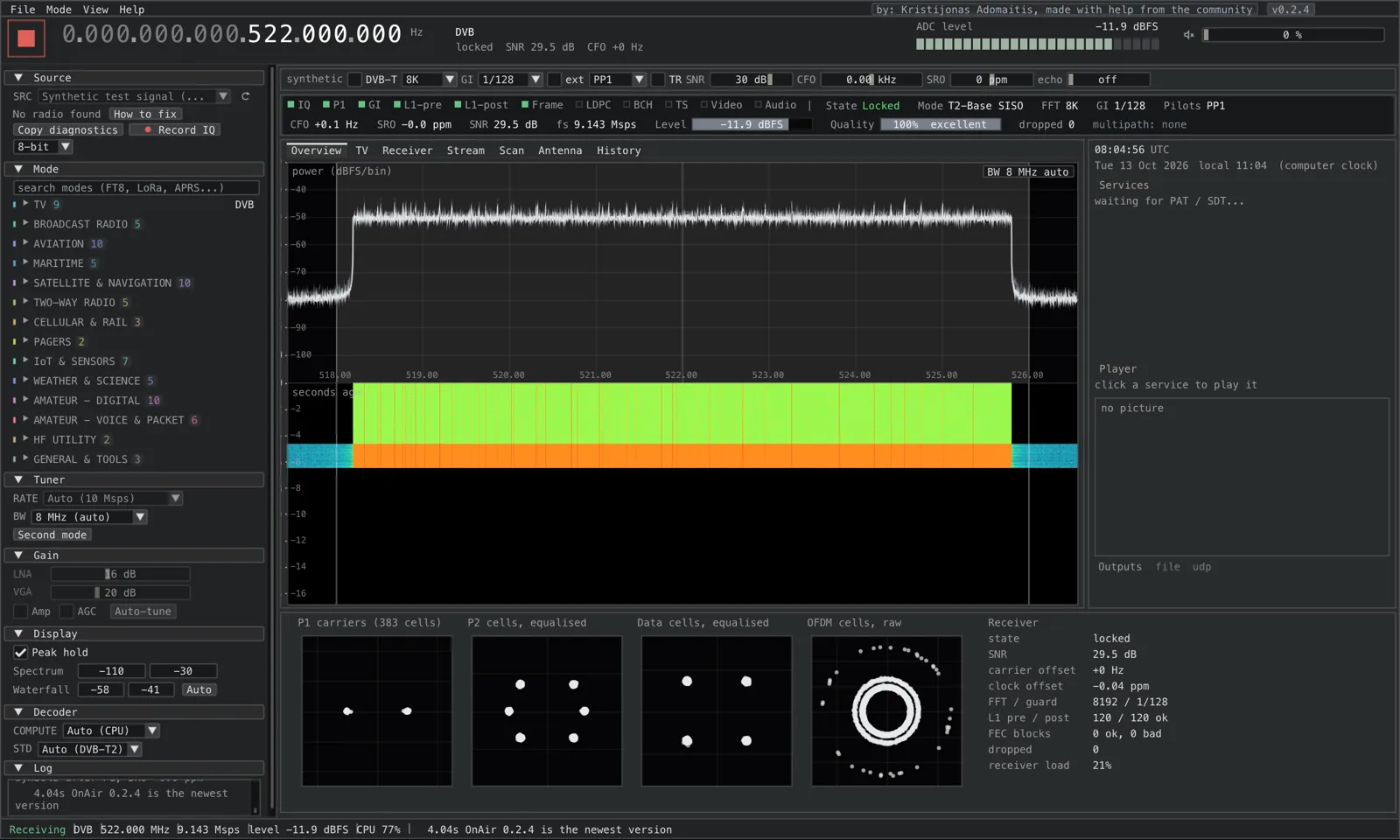
Limits and what it was checked with
Used and checked on real broadcasts.
Which radio you need
Any radio that tunes this range works. An RTL-SDR covers roughly 24 MHz to 1.7 GHz, and every other radio in the radio guide reaches it too. Antenna height and a clear view of the transmitter matter most.
Receiving and the law
Tutorials
Questions about DVB
Can I decode DVB with an RTL-SDR?
No: wide TV channels need a radio that samples faster than an RTL-SDR, which reaches about 2.4 Msps. See the radio guide.
Is it legal to receive DVB?
Receiving free-to-air broadcasts is legal in most countries. OnAir cannot decode encrypted or scrambled services, and does not try to.
Can I try DVB in OnAir without a radio?
Yes. Most modes include a built-in synthetic test signal, so you can open the screen and try the controls before you own a radio.